-
Pedestrian Management – Flexibility or uncertainty?
Share Pedestrian Management – Flexibility or uncertainty? on Facebook Share Pedestrian Management – Flexibility or uncertainty? on Twitter Share Pedestrian Management – Flexibility or uncertainty? on Linkedin Email Pedestrian Management – Flexibility or uncertainty? link
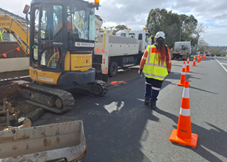
Footpath Closed. Please wait for an escort.
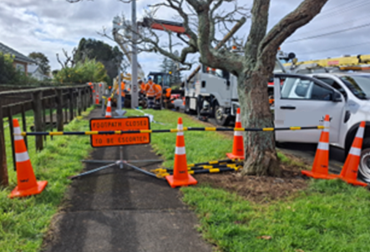
This simple sign asks pedestrians to wait when their footpath is closed, primarily to keep them safe from significant hazards. However, there are times when no one is available to escort people from this closure point, leading to poor outcomes.
We review many sites and often find the “Footpath Closed please wait to be escorted” notice serves only as a partial solution. While it keeps people away from work areas, it frequently fails to meet the actual needs of pedestrians and other path users.
Ask yourself: If you were standing at that sign with no escort in sight –
- how long would you wait?
- Would you stay if someone was present to help, or might you take your chances by going around or crossing the road?
- Do you think about where people naturally want to go (demand lines)?
- What choices might a student, jogger, or someone with vision or mobility challenges make?
- Would you feel comfortable walking through an active worksite filled with various hazards?

What does good pedestrian management look like?
- Prompt assistance: A pedestrian marshal should be available quickly—ideally within seconds, not minutes—to help anyone waiting at the closure.
- Safe, planned routes: There should be a clearly considered and communicated route for escorting pedestrians, planned ahead of time and shared with everyone involved.
- Hazard-free passage: The escort route must be checked and kept free of hazards, making sure it’s suitable for all users, including those with mobility needs.
- Clear documentation: All plans for escorting pedestrians should be well documented in the approved Temporary Traffic Management Plan.
Why does this matter?
If no one is available to escort, or if the route isn’t safe, pedestrians might try to find their own way—sometimes putting themselves at risk. It’s important to think about what different people might do in these situations.Reference -
Protecting Vulnerable Road Users in Temporary Traffic Management environments, Practice Note.
Let’s all help friends and family get home safely by making sure pedestrian management is practical, prompt, and truly protective.
-
Risk Assessments: Better Together
Share Risk Assessments: Better Together on Facebook Share Risk Assessments: Better Together on Twitter Share Risk Assessments: Better Together on Linkedin Email Risk Assessments: Better Together linkThis article presents general observations from Auckland Transport’s Temporary Traffic Management (TTM) advisory team. It supports continuous improvement within the temporary traffic management industry and does not reference any specific individual or organisation.
As we move from the Code of Practice for Temporary Traffic Management (CoPTTM) to the New Zealand Guide to Temporary Traffic Management (NZGTTM), it is important to reflect on how different Persons Conducting a Business or Undertaking (PCBU) may naturally focus on certain risk categories. This tendency is influenced by factors such as resources, cost, time, reputation, and health and safety, all of which shape effective risk management strategies.
NZGTTM requires all parties to consider risks for all recipient groups, while CoPTTM provided broader, systemic coverage for three main parties/elements at risk: network functionality, road users, and workers. Individual perceptions of risk are shaped by past experiences, knowledge, focus, and other factors, which can lead to blind spots. Similarly, different PCBUs may prioritise certain risks over others, as observed in risk assessments and worksite TTM practices.
Common Risk Assessment Challenges
Many traffic management plans submitted as NZGTTM applications do not adequately consider risks before implementing controls. Assessments are often missing, incomplete, or do not clearly define net risk after controls. Sometimes, risks are only evaluated after mitigations are chosen, without addressing any transferred or residual risks. Changes may resolve one issue but create another, and there is often little insight into why specific controls and trade-offs were selected. Risk matrices frequently overlook details, such as steel plates present during certain phases and considerations for unattended states, especially regarding psychological impacts on road users. Excessive false alarms from unnecessary temporary speed limits or warnings can decrease compliance network-wide, undermining the effectiveness of safety installations where they are genuinely needed.
Importance of Comprehensive Planning
Effective planning, including thorough risk assessment and temporary traffic management mitigations, requires collaboration among project management, health and safety, construction planning, traffic engineering, and stakeholder engagement. This ensures outcomes that are safe, coordinated, and efficient.
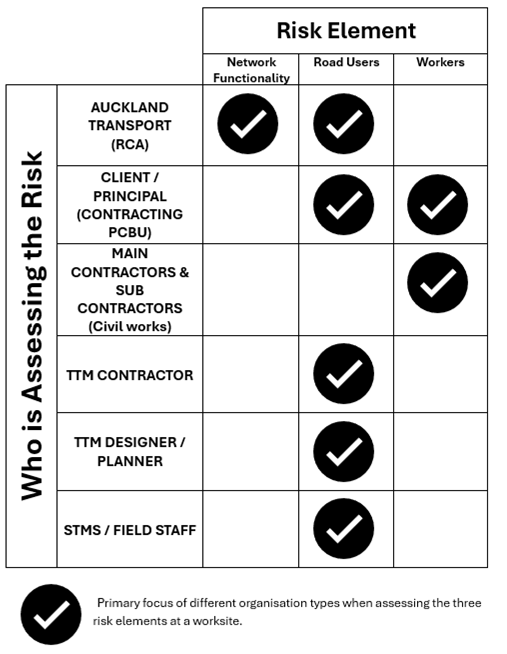
Risk Focus Tendency Matrix
The following conceptual matrix, developed from aggregated observations, highlights typical focus areas for different elements assessing risk. It is designed to prompt reflection and discussion, not to serve as a definitive guide for any specific situation or PCBU group. Note that Auckland Transport's functions as RCA, Principal, and Advisory may not all be represented.

The table has been developed as a generalised summary from observations of general behaviours and outcomes by the AT RCA Temporary Traffic Monitoring Team (TTM Advisors) and shows the observed natural focus areas for the different organisations and individuals when assessing risk. We have included it here for reflection and to help us all recognise that it is unlikely that one individual working alone will be able to definitively assess all risks in any specific situation.
Why These Patterns Matter
This matrix demonstrates the necessity of a multi-party approach—the 3Cs: consult, cooperate, and coordinate. Each PCBU’s natural focus can create gaps that others must help address. For instance, a presentation at the 2024 Tarmac Conference illustrated how pedestrian exposure to overhead work zones varies. CoPTTM might call for closing a large section of footpath for the day, while NZGTTM could allow for a more tailored, moving closure that aligns with the location of overhead works. This reduces net risk by minimising site footprint and improving behavioural compliance and network satisfaction. A risk-based approach compels all PCBUs to consider all parties at risk, not just their usual areas of concern. This matrix is just one example for how different parties might have primary or secondary concerns and is for illustrative purposes.
Characteristics of Comprehensive Traffic Management Plans
Traffic management plans (TMPs) that demonstrate a more thorough risk consideration show that PCBUs actively work to identify and address areas needing more attention through:
- Full cross-functional risk consultation involving all PCBU parties (the 3Cs).
- Structured risk assessments that systematically address all three elements/parties at risk, developing solutions using the hierarchy of controls before determining the final approach, making these assessments actionable for those involved at relevant times.
- Measured, digestible risk matrices tailored to specific works, with practical applications for onsite parties and clear protocols for sharing risk information across PCBUs.
- Defined assurance and monitoring actions, roles, and responsibilities to track effectiveness across all risk areas, fostering mutual understanding of chosen approaches and setup rationale.
Auckland Transport’s Role as Road Controlling Authority (RCA)
As RCA, Auckland Transport reviews applications through a holistic lens, considering all risk holder categories and elements. Key evaluation principles have emerged as understanding of the risk-based approach has evolved. These principles reflect a commitment to worker and public safety and network integrity and are applied in line with national guidance and regulatory frameworks.
Towards Actionable Risk Assessments
Adopting ISO 31000 Risk Management Principles can guide improvement:
- Integration: Embed risk management in all organisational activities and decision-making.
- Structured and comprehensive: Take a systematic approach that addresses all types of risk. Note that risk registries are not risk assessments; avoid overloading assessments with too many items to maintain clarity.
- Customized: Tailor risk management frameworks to the organisation’s context and objectives.
- Inclusive: Involve relevant stakeholders to incorporate their knowledge and perspectives.
- Dynamic: Monitor and review risks continuously, recognising they change over time.
- Evidence-based: Base risk management on the best available information.
- Human and cultural factors: Acknowledge the significant influence of behaviour and culture on risk management effectiveness.
Moving Forward Together
Recognising natural focus areas—and where some risks may be overlooked—underscores the importance of collaboration. A risk-based approach encourages PCBUs to:
- Identify their own focus areas and potential blind spots.
- Consult with others to uncover overlooked risks.
- Coordinate systems for monitoring effectiveness across all parties.
- Communicate consistently and in a targeted way as risks evolve throughout a project.
As the transition continues, understanding will develop further, and many organisations are already making progress. By embracing the principles of consultation, cooperation, and coordination (the 3Cs)—in line with WorkSafe and the Health and Safety at Work Act—we can work towards meeting our duties and reveal risks critical to others.
With greater flexibility comes increased responsibility. This is how safer, more resilient outcomes can be created together.
-
Unnecessary and redundant Worksites – Q3 2025
Share Unnecessary and redundant Worksites – Q3 2025 on Facebook Share Unnecessary and redundant Worksites – Q3 2025 on Twitter Share Unnecessary and redundant Worksites – Q3 2025 on Linkedin Email Unnecessary and redundant Worksites – Q3 2025 linkThis section looks at how we’re working to make our roads safer and more efficient by tackling unnecessary or redundant worksites!
What does “redundant” mean?
- Redundant worksites are places where Temporary Traffic Management (TTM) is set up, but there’s no risk present. This can cause frustration for road users and lead to inefficiencies.
- On the flip side, there are also unprotected risk sites—places where there’s a risk, but no TTM has been put in place. Both situations are important to address for safety and public trust.
Proactive Redundant TTM Collection Update
Directionz Ltd launched its proactive collection of redundant TTM equipment across Auckland in late March. The company is gradually surveying the Auckland network to identify and retrieve obsolete TTM gear. This project is designed to improve both the efficiency and cleanliness of the network.
We are encouraging industry partners to stay engaged and support this initiative. You can play your part by responding to requests to remove the marked gear we find that belongs to your company.
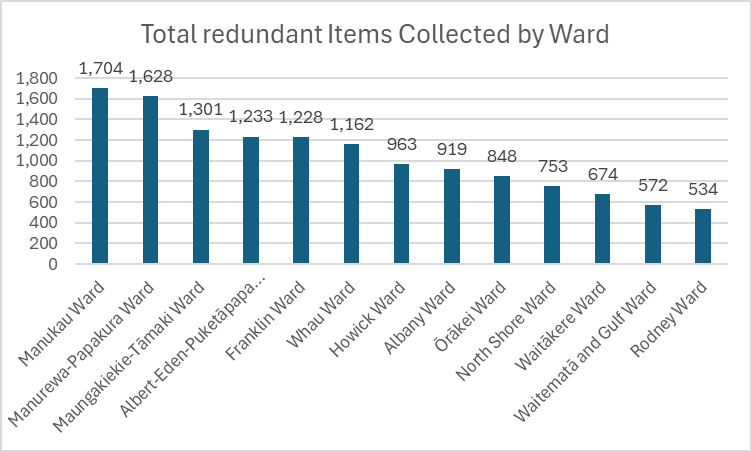
As of 21st October 2025, a total of 15,046 items have been cleared from the network, while 5,477 exceptions have been noted and left in place. Further updates will be shared in the next newsletter.
Figure 1: Redundant items collected by Ward
Figure 2: Exceptions (locations where gear was not picked up) by ward How did we do this quarter?
Here’s a summary of TTM site inspection data for the Auckland Transport road network, including both redundant worksites and unprotected risk sites. The data aligns with Road Efficiency Group Te Ringa Maimoa’s (REG) reporting requirements.:
Period
Total TTM Inspections
Unnecessary / Redundant Worksites
Risk Present, No TTM
Customer Reports / Complaints
2024 Q4 (Jan–Dec)
1,929
38
64
2,460
2025 Q1 (Jan–Mar)
440
15
23
592
2025 Q2 (Apr–Jun)
462
23
20
269
2025 Q3 (Jul–Aug)
691
24
25
362
Key points:
- There was a noticeable decrease in the percentage of redundant sites this quarter compared to the previous quarter, although it’s similar to the first quarter of the year.
- Addressing both redundant and unprotected sites helps us reduce unnecessary costs, improve safety, and respond to community concerns.
Who was involved? – Redundant Worksites Q3 2025
These tables show which organizations were linked to redundant worksites during Q3 2025. This information helps us identify where improvements can be made and encourages everyone to keep raising the bar for efficient, safe road management.
By Client / Principal
Client / Principal
Number of Redundant Worksites
Auckland Transport
6
Watercare Services Ltd
2
Vector
2
Private
2
Unknown
5
Other
4
By Lead Contractor
Lead Contractor
Number of Redundant Worksites
Fulton Hogan Ltd
4
Downer Ltd
2
Other
4
Unknown
6
What’s next?
Auckland Transport is committed to making our roads safer, more efficient, and better for everyone. Here’s what’s on the horizon:
- Reducing unnecessary costs: By identifying and removing redundant worksites, we can save resources and focus efforts where they’re truly needed.
- Improving safety outcomes: Ensuring that TTM is only used where there’s genuine risk helps protect both road users and workers.
- Responding to community concerns: We’re listening to feedback from the public and stakeholders and using it to guide improvements.
- Supporting national TTM improvement goals: Our work aligns with broader industry efforts to raise standards and share best practices.
- Ongoing monitoring and collaboration: We’ll keep tracking trends, working closely with contractors, and refining our processes to make sure TTM is always effective and justified.
- Encouraging proactive reporting: We invite everyone—contractors, staff, and the public—to report unnecessary or missing TTM so we can address issues quickly.
Together, these steps will help us build a safer, more efficient road network for all. If you have ideas or want to get involved in these improvements, we’d love to hear from you
-
Leaderboards: Celebrating Excellence in TTM
Share Leaderboards: Celebrating Excellence in TTM on Facebook Share Leaderboards: Celebrating Excellence in TTM on Twitter Share Leaderboards: Celebrating Excellence in TTM on Linkedin Email Leaderboards: Celebrating Excellence in TTM linkWe love recognising the organisations and teams who set the standard for Temporary Traffic Management! Here’s a closer look at the Q3 2025 leaderboards, which showcase performance across three key groups: Clients/Principals, Main/Lead Contractors, and TTM Contractors. The ratings given have been based on independent reviews.
How Leaderboards Work
- KPI %: This is the percentage of satisfactory reviews (High Standard, Acceptable, Needs Improvement).
- Categories: Organisations are grouped by the number of reviews they received—more reviews mean a broader sample of their work.
- Recognition: Only organisations with more than four Site Condition Reviews (SCRs) are listed, ensuring results are meaningful and fair.
Why do these results matter?
These scores help us recognise excellence, encourage improvement, and inspire everyone in the TTM community to keep raising the bar. If you’d like to see more details about your organisation’s results or want to know how to improve your score, just reach out. We’re here to help everyone succeed!
Client / Principal Leaderboard (Q3 2025)
These are the organisations that commission or oversee TTM works. High scores reflect strong leadership and commitment to safety and compliance.
Organisation
KPI %
Notes
Auckland Council
78.3%
Highest scoring public client
Vector Power
74.4%
Consistent performer
Watercare Services Ltd
74.3%
Close third
Auckland Transport
67.3%
Major network operator
Chorus
65.2%
Telecommunications provider
NZTA Waka Kotahi
63.6%
National transport agency
Other Public Orgs/Utilities
75.9%
Group average for smaller public entities
Private Orgs/Developments
54.6%
Group average for private sector
Main / Lead Contractor Leaderboard
Main/Lead Contractors are grouped by the number of reviews they received.
Here are the top performers in each category:
20+ Reviews
Number of organisations in category = 7
Contractor
KPI %
NorthPower Ltd
90.9%
Ventia NZ Ltd
77.3%
HEB Contractors Ltd
69.6%
10–19 Reviews
Number of organisations in category = 5
Contractor
KPI %
March Cato Limited
100%
Stockman General Contractors
100%
Dempsey Wood Civil Ltd
73.3%
Traffica Roading Services Ltd
68.8%
4–9 Reviews
Number of organisations in category = 20
Contractor
KPI %
John Fillmore Contracting Ltd
100%
Powerhouse Civil Ltd
100%
Asplundh
100%
GAJV
100%
Kalmar Construction Ltd
100%
Traffic Systems Ltd
100%
CB Civil & Drainage Ltd
87.5%
Liveable Streets
85.7%
Pipeline & Civil Ltd
85.7%
Contractors with perfect scores demonstrate exceptional commitment to safety and compliance. Well done!
TTM Contractor Leaderboard
TTM Contractors are also grouped by review count, with several organisations achieving top marks:
20+ Reviews
Number of organisations in category = 6
Contractor
KPI %
Beesafe Traffic Control
96.2%
Ventia NZ Ltd
76.9%
Fulton Hogan Ltd
75%
10–19 Reviews
Number of organisations in category = 11
Contractor
KPI %
Absolute Traffic Solutions
88.9%
Traffix (2020) Ltd
83.3%
Alliance Services Ltd
83.3%
Active Traffic Control Ltd
81.8%
4–9 Reviews
Number of organisations in category = 24
These contractors may be smaller or newer, but many have achieved perfect scores—showing outstanding commitment to safety and compliance!
Contractor
KPI %
Traffic Systems Ltd
100%
March Cato Ltd
100%
Pro-tect (Auck) Ltd
100%
Traffic Management Academy Ltd
100%
Divert Traffic Solutions Ltd
100%
Proactive Traffic Management Ltd
100%
Day Night Traffic Ltd
85.7%
Lanepro Traffic Management Ltd
83.3%
Congratulations to all contractors who achieved perfect scores—your dedication to safe and effective traffic management is making a real difference!
TTM Organisational Leader Board
10 to 19 Reviews
Number of organisations in category: 11
TTM Contractor
KPI %
Absolute Traffic Solutions Ltd
88.90%
Traffix (2020) Ltd
83.30%
Alliance Services Ltd
83.30%
Active Traffic Control Ltd
81.80%
4 - 9 Reviews Category
Number of organisations in category: 24
TTM Contractor
KPI %
Traffic Systems Ltd
100.00%
March Cato Ltd
100.00%
Pro-tect (Auck) Ltd
100.00%
Traffic Management Academy Ltd
100.00%
Divert Traffic Solutions Limited
100.00%
Proactive Traffic Management Ltd
100.00%
Day Night Traffic Ltd
85.70%
Lanepro Traffic Management Ltd
83.30%
-
KPI’s and Reported crashes at worksites - Q3 2025
Share KPI’s and Reported crashes at worksites - Q3 2025 on Facebook Share KPI’s and Reported crashes at worksites - Q3 2025 on Twitter Share KPI’s and Reported crashes at worksites - Q3 2025 on Linkedin Email KPI’s and Reported crashes at worksites - Q3 2025 linkIn this section, we provide a snapshot of key performance indicators and reported crash data at worksites, helping to track safety and compliance across the road network.
Key Performance Indicators
We report monthly on key performance indicators (KPIs) to track compliance and performance in Temporary Traffic Management (TTM) across the network. One main KPI is the percentage of Satisfactory TTM Sites.
A site is considered satisfactory if it receives a rating of High Standard, Acceptable, or Needs Improvement. This helps ensure we consistently measure site quality.
The table below shows the monthly trend for the percentage of Satisfactory TTM Sites.
Data can be provided to Principal, Main Contractor, or TTM organisations on request. If you’d like more detailed data on your own organisation, just ask!
Month
% Satisfactory TTM Sites
Jul-24
79%
Aug-24
78%
Sep-24
76%
Oct-24
77%
Nov-24
77%
Dec-24
76%
Jan-25
74%
Feb-25
76%
Mar-25
78%
Apr-25
74%
May-25
77%
Jun-25
75%
Jul-25
78%
Aug-25
77%
Sep-25 69% Reported Crashes at Work Sites
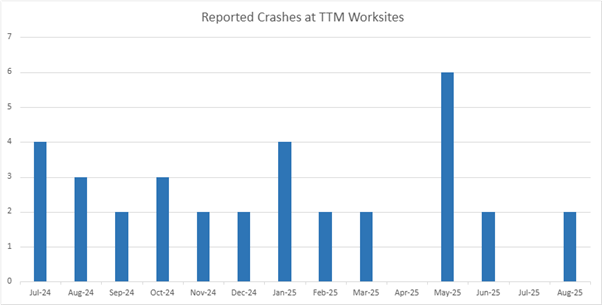
Worksite incidents are identified through various sources, including contractor self-reports, customer feedback, media coverage, police reports, and other informal channels.
Please note that trend analysis is currently limited due to known underreporting. However, we’ve seen a significant improvement in the number of self-initiated reports over the past year—thank you, and let’s keep them coming!
The graph below presents reported crashes at work sites.

Crash report data plays a vital role in helping us identify areas for improvement across the industry. If you have information about a crash at a work site, please report it via TTM.Crash@at.govt.nz.
-
STMS High Standard Results – Q3 2025
Share STMS High Standard Results – Q3 2025 on Facebook Share STMS High Standard Results – Q3 2025 on Twitter Share STMS High Standard Results – Q3 2025 on Linkedin Email STMS High Standard Results – Q3 2025 linkThe results for the quarter highlight both individual and team achievements, reflecting consistent dedication to high standards in traffic management.
Each month, a diverse group of individuals from various traffic management organisations were acknowledged for their commitment to excellence in site safety, compliance, and best practices.
July 2025 - STMSs with High Standard Result
78 High Standard results out of 223 Reviews (including unattended worksites).
STMS
Organisation
Anil Emmanuel
Beesafe Traffic Control Ltd
Daesharn Peeni
Beesafe Traffic Control Ltd
David Joe
Pro-tect (Auck) Ltd
Elijah Tuua
Traffix (2020) Ltd
Eloise Bewick
Ventia NZ Ltd
Eric Lin
Other
Fa'apale Lafililo
Claddagh Group Ltd
Garrie Largo
Independent Traffic Control Ltd
Gurwinder Singh
BC Traffic Management and Civil Ltd
Jasper Mandap
Independent Traffic Control Ltd
John Punimata
Absolute Traffic Solutions Ltd
Karere Elikana
Ezy Traffic Ltd
Keyur Patel
Day Night Traffic Ltd
Kiali Palakua
Beesafe Traffic Control Ltd
Martin Ral
Trafficsolutions NZ Ltd
Mathew
Fulton Hogan Ltd
Mosa'ati Latu
Traffic Management NZ Ltd
Navjot Singh
Mazca Civil Ltd
Novema Kolo
Traffic Management NZ Ltd
Raki Stevens
Other
Reynold Norris
Alliance Services Ltd
Sharon Hereora
Absolute Traffic Solutions Ltd
Vinod Prakash
HEB Contractors Ltd
Willem Mangu- Ngatuere Way
Visible Traffic Ltd
August 2025 - STMSs with High Standard Result
69 High Standard results out of 219 Reviews (including unattended worksites).
STMS
Organisation
Akariva Saunokonoko
Agile Infrastructure Services Ltd
Bhavesh Patel
Ventia NZ Ltd
Collin Billington
HEB Contractors Ltd
Dino Broughton
Traffic Systems Ltd
Dion Tahu
Beesafe Traffic Control Ltd
Duy Nguyen
Method Group Limited
Funa Fauatea
Traffix (2020) Ltd
Harold Falwasser
Trafficsolutions NZ Ltd
Jamie Jerry
Traffica Roading Services Ltd
Jeffrey Ligsay
Fulton Hogan Ltd
Jordan Wharewaka
Claddagh Group Ltd
Justin Matangi
Chevron Traffic Services
Karere Elikana
Ezy Traffic Ltd
Keith
Data Stream NZ Ltd (DSNZL)
Krishna Jenu
Independent Traffic Control Ltd
Liaki Akai
Fulton Hogan Ltd
Mai Keniseli
Beesafe Traffic Control Ltd
Mai Keniseli
Beesafe Traffic Control Ltd
Manjinder
Ventia NZ Ltd
Matthias Uluulu
Fulton Hogan Ltd
Nick Tapiki
HEB Contractors Ltd
Pradipkumar Dobariya
MJ Traffic Services Ltd
Randy Mercadal
Independent Traffic Control Ltd
Ranjodh Singh
Intergroup Ltd
Reylond Norris
Alliance Services Ltd
Rogelio Jr. Hurboda
Electrix Ltd t/a Omexom New Zealand
Sean Sun
Lanepro Traffic Management Ltd
Solofua Salu
Chevron Traffic Services
Sumit Mehta
Traffic Management NZ Ltd
Tara Cathcart
CSL Infrastructure Ltd ( CSLI Ltd)
September 2025 - STMS with High Standard Result
74 High Standard results out of 250 Reviews (including unattended worksites)
STMS
Organisation
Ada Makara
Active Traffic Control Ltd
Akariva Saunokonoko
Agile Infrastructure Services Ltd
Andrew
Electrix Ltd t/a Omexom New Zealand
Anil Emmanuel
Beesafe Traffic Control Ltd
Axel Munoz Navarrete
Beesafe Traffic Control Ltd
Brian Gore
Other
Funa Fauatea
Traffix (2020) Ltd
Funa Fauatea
Traffix (2020) Ltd
Hiks Witika
Proactive Traffic Management Ltd
Jordan Denton
Traffic Management Academy Ltd
Karan Prakash
Traffic Management NZ Ltd
Krishneel Prakash
Optimal Traffic Civil Ltd
Leeroy Carmichael
Outsource Communications Ltd
Leon Korewha
Other
Loma Tengere
Independent Traffic Control Ltd
Louisa Ah-Lin
Traffic Safe Ltd
Matthew John Alexander
Traffic Management Academy Ltd
Maynard Reyes
Independent Traffic Control Ltd
Pamela Dodds
Fulton Hogan Ltd
Paul Lorigan
Ventia NZ Ltd
Pradipkumar Dobariya
MJ Traffic Services Ltd
Randy Santos
Independent Traffic Control Ltd
Rox Pene
Onsite TTM NZ Ltd
Tim Folau
Alliance Services Ltd
Vinnie Tosi
Electrix Ltd t/a Omexom New Zealand
Willem Mangu-Ngatuere
Visible Traffic Ltd
Zay Mathews
March Cato Ltd
-
STMS of the month – Q3 2025
Share STMS of the month – Q3 2025 on Facebook Share STMS of the month – Q3 2025 on Twitter Share STMS of the month – Q3 2025 on Linkedin Email STMS of the month – Q3 2025 linkEvery month, we love to celebrate the Site Traffic Management Supervisors (STMS) who go above and beyond to keep our worksites safe, efficient, and running smoothly. These individuals have shown professionalism, and a commitment to best practice in Temporary Traffic Management.
Each STM of the Month receives a certificate and a $100 gift card as a small token of appreciation for their hard work and leadership.
A big thank you to our sponsor for this quarter, Advance Traffic Management and to Rex Hunia for making this happen.
July 2025
78 SCRs were awarded a High Standard result (out of a total of 223 SCR’s completed) in July 2025 including Unattended and Special Programme.
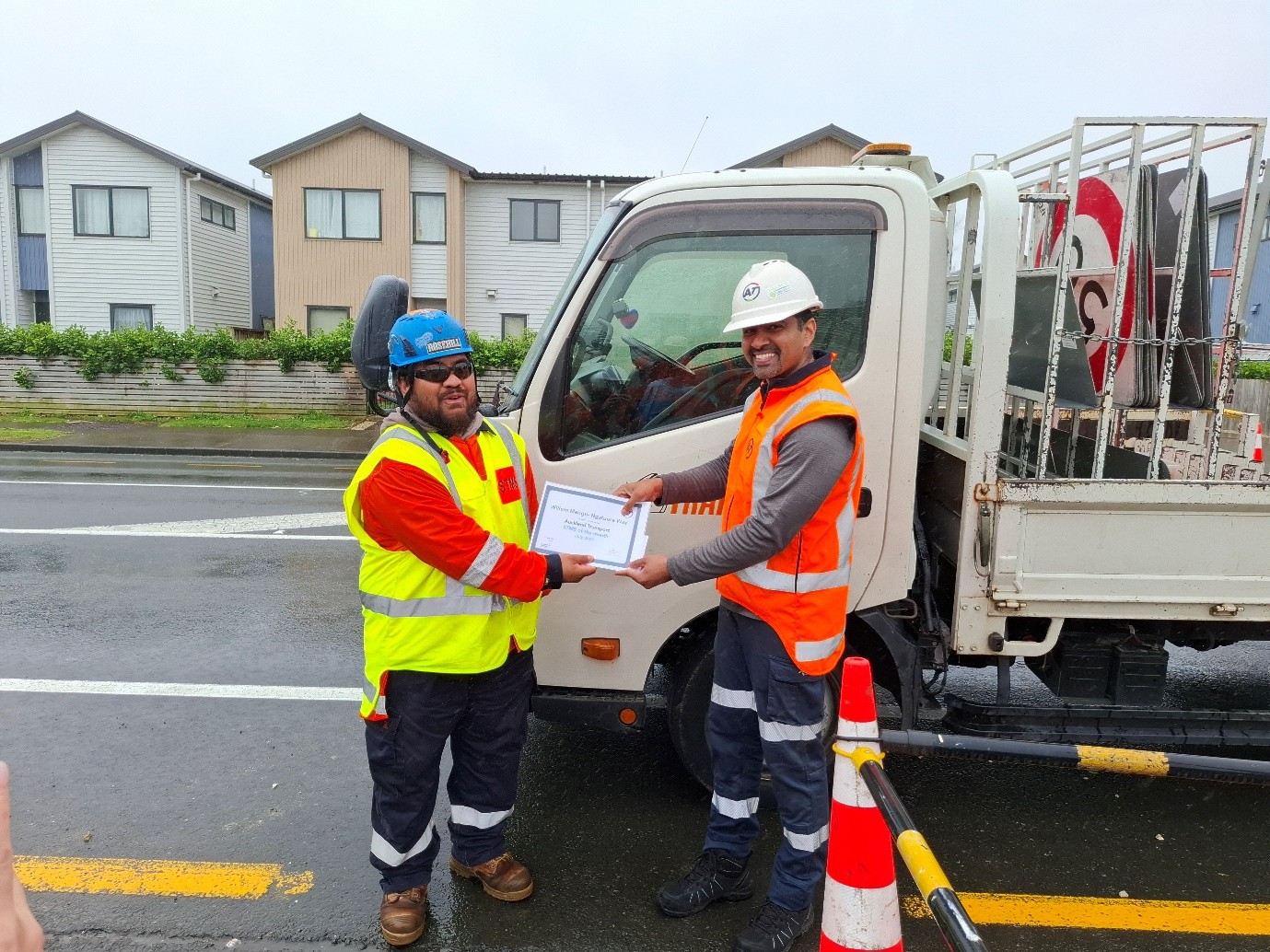
Winner: Willem Mangu
Organisation: Visible Traffic Ltd
Achievement: Willem stood out for consistently maintaining high standards across multiple sites, ensuring both safety and compliance were top priorities. Willem’s attention to detail and positive attitude set a great example for the whole team.
August 2025
69 SCRs were awarded a High Standard result (out of a total of 219 SCR’s completed) in August 2025 including Unattended and Special Programme.
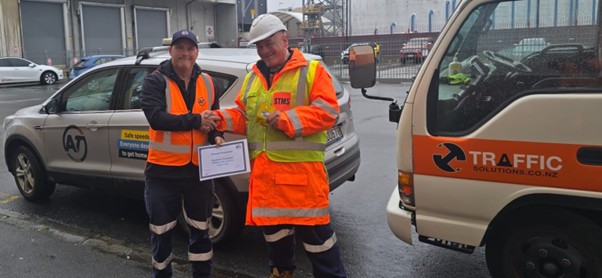
Winner: Harold Falwasser
Organisation: Traffic Solutions NZ Ltd
Achievement: Harold was recognised for proactive problem-solving and excellent communication with both crews and the public. Harold’s leadership helped deliver safe, well-managed worksites throughout the month.
September 2025
74 SCRs were awarded a High Standard result (out of a total of 250 SCR’s completed) in September 2025 including Unattended and Special Programme.
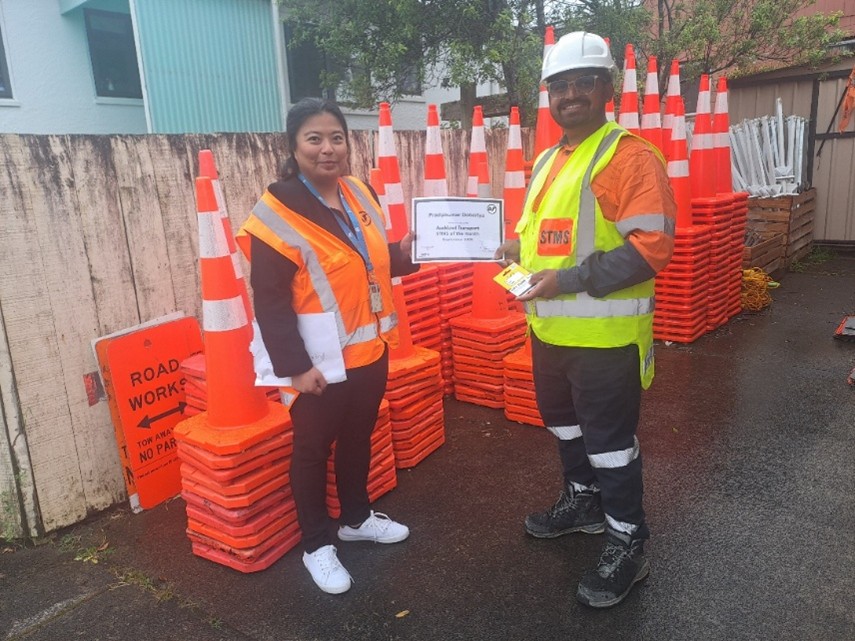
Winner: Pradipkumar Dobariya
Organisation: MJ Traffic Services Ltd
Achievement: Pradipkumar impressed with a strong focus on continuous improvement and a willingness to go the extra mile to support colleagues and ensure best practice on every job.